


8,000-Year-Old Fig Found in Andık Cave
· Dünya Gazetesi
Archaeological excavations in Andık Cave in Balıkesir's Havran district have uncovered 8,000-year-old carbonized remains of the geographically indicated Havran black fig, dating back to the Neolithic period.
8,000-Year-Old Fig in the Cave
Archaeological excavations in Andık Cave, located in Balıkesir's Havran district, have uncovered 8,000-year-old remains of the geographically indicated Havran black fig. The excavations, carried out with the permission of the Ministry of Culture and Tourism and supported by the Balıkesir Kuva-yi Milliye Museum Directorate, Balıkesir Metropolitan Municipality, and Havran Municipality, have brought to light the region's ancient agricultural past. Meticulous work in the cave, first discovered by Prof. Dr. Kılıç Kökten in 1949, has proven that the region's traditional fruit-growing heritage extends back to the Neolithic period.
Challenging Excavation Efforts in Andık Cave
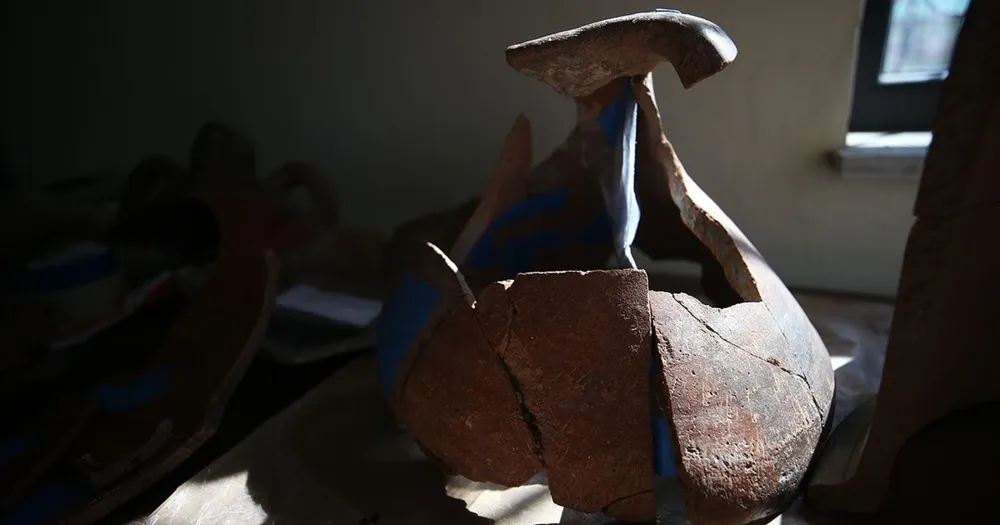
The excavation team, working in the İnboğazı area of Kocaçal Hill, approximately 2 kilometers from the İnönü Neighborhood, reaches the cave each morning by traversing dirt roads with off-road vehicles and transporting their materials by donkeys. The team, led by Prof. Dr. Derya Yalçıklı, a faculty member of the Archaeology Department at Çanakkale Onsekiz Mart University, continues its excavations in the multi-gallery structure at a depth of 59 meters. In addition to summit and leopard figures on the cave walls, numerous ceramic vessels, and tools made of stone and bone have been brought to light.
Traces of Life Dating Back to the Neolithic Period
Excavation leader Prof. Dr. Derya Yalçıklı stated that the cave has been inhabited since around 6700 BC and described the period stratification as follows:
'It primarily begins in the Early Bronze Age and continues until the middle of the Late Bronze Age. Thus, it covers a period up to the mid-3rd millennium BC. In our later findings, we also detect short periods of use during the Byzantine era.'
Referring to the architectural and tool findings in the cave, Prof. Dr. Derya Yalçıklı from the Archaeology Department at ÇOMÜ explained the importance of the floor arrangements:
'We found living units and their floors, and we can determine living levels. The vessels they used daily, grinding stones; as these periods were times when metal was not widely used, or even non-existent, the collection consists mostly of bone, stone, and cutting tools. We are working in layers that provide us with much unknown information about these periods for the region of Balıkesir opening to the Aegean. This year, we encountered very interesting floor arrangements. We don't know much about such floor arrangements in caves. That is, we have identified arrangements similar to those made in a dwelling within the cave during the stages when ceramics were not yet in use. This is, of course, a very good result for both the region and Anatolian archaeology.'
Historical Results from TÜBİTAK Analysis
In addition to staple agricultural products like barley and wheat, carbonized fig remains were found stored in the excavation layers. Prof. Dr. Derya Yalçıklı, explaining the analysis process of the remains, made the following assessment:
'One of Havran's important products is the geographically indicated fig. We found it in its carbonized form. According to the Carbon-14 test conducted at TÜBİTAK Marmara Research Center, we see that the fig remains are dated to 6300 BC. This means we can say that Havran's famous fig has actually been in the region since the Neolithic period. Of course, we find many products for sustenance. We recover barley, wheat, and many other products in the layers we identify, but the fig is very well preserved, and its quantity is quite large. It was piled up in a corner, in storage. This indicates it was one of the products, one of the fruits used for sustenance during that period.'
Deep-Rooted Heritage of Havran Agriculture
Havran Mayor Emin Ersoy, stating that they provide uninterrupted support to the excavation efforts as the local administration, pointed to the value of the findings for the district's agricultural history. Expressing his gratitude to the excavation team, Havran Mayor Emin Ersoy stated:
'Valuable items and materials from very ancient years are unearthed in the cave every year.'
The 8,000-year-old fig remains brought to light concretely document the millennia-old agricultural roots of the Havran black fig in the region.
| Value | Period | Measure |
|---|---|---|
| 8000 years | 6300 BC | Age of fig remains |
| 1949 years | 1949 | Year of cave discovery |
| 59 meters | — | Cave depth |
| 6700 BC | 6700 BC | Beginning of the cave's first use |