


Greenhouse Initiative in Batman Halts Seasonal Agricultural Migration
· Hürriyet Ekonomi
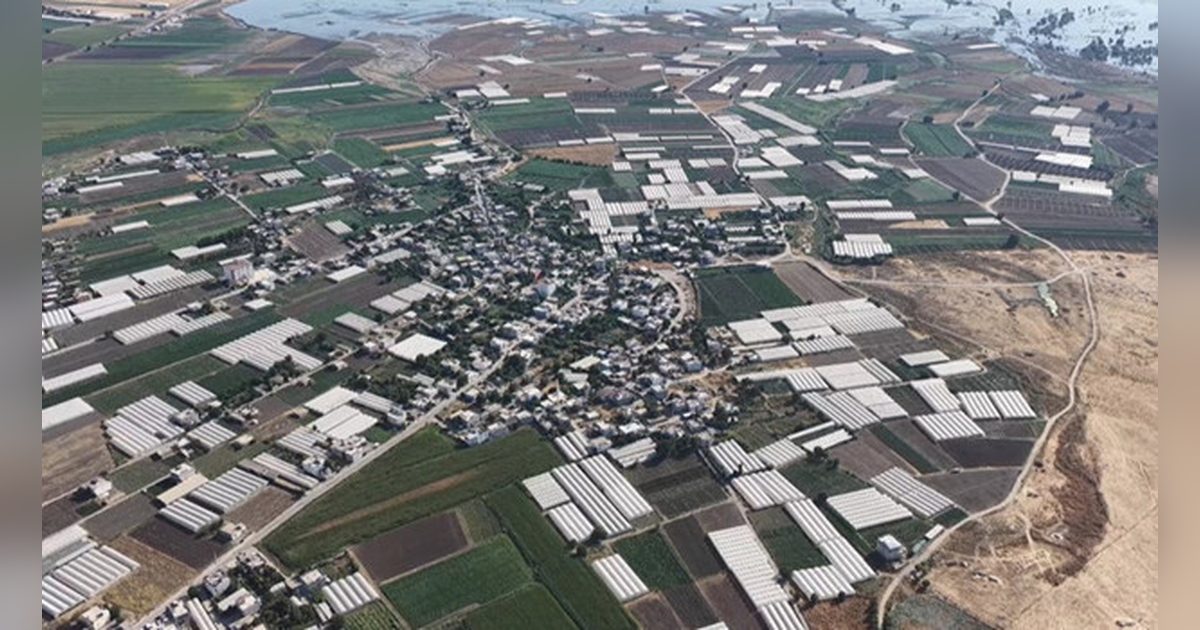
Greenhouse activities in Batman's Balpınar district, reaching 600 decares with state support, have reversed seasonal worker migration by generating an annual production of 26,000 tons and an economic value of 650 million Turkish Liras.
Historical Development of Greenhouse Farming in Balpınar
The protected cultivation greenhouse adventure in Balpınar, a district connected to Batman's center, emerged in the 1990s but was initially met with resistance. Following initial trials in 1994 and the first establishment in 1997, trial greenhouses were launched in 2002 with state support. As farmers embraced the project, greenhouse farming spread rapidly, becoming the district's primary source of income. Balpınar, which currently has 1200 households and a population of 6,260, was once a settlement that experienced outward migration. Thanks to protected cultivation vegetable farming, it has now transformed into a production hub attracting reverse migration.
Greenhouse Production Data Across Batman
Batman Provincial Director of Agriculture and Forestry, Necdet Tuncer, shared current data on the size of protected cultivation areas and workforce distribution in the sector across Batman:
"We are the second most intensive greenhouse farming district in the Southeastern Anatolia Region. Our greenhouse trials began in 1994, our first greenhouse was established in 1997, and it started to be widespread by farmers since 2002. There are approximately 750 decares of greenhouse activity in Batman. Nearly 90% of this, meaning about 600 decares, is in the Balpınar district. More than 150 of our farmers are engaged in greenhouse farming here. We have about 550 greenhouses. It is a sector heavily reliant on female labor, with 65% female employment. Nearly a thousand people work here permanently, providing income for their family budgets."
Agricultural Development Preventing Regional Migration
While an annual harvest of 26,000 tons of vegetables is achieved in the greenhouses established in the district, the contribution of this production to the local economy has reached 650 million Liras. Batman Provincial Director of Agriculture and Forestry, Necdet Tuncer, spoke about the effects of agricultural investments on migration patterns and social balance:
"Our province experiences significant seasonal migration, particularly in the summer months, with people migrating as agricultural laborers. However, with the widespread adoption of greenhouse farming in Balpınar, our people have stopped going elsewhere in search of work and are contributing to the economy by producing in their own region. Last year alone, we implemented 32 greenhouse projects. This year, we are implementing nearly 40 greenhouse projects again. This has created an opportunity for the development and progress of the district, allowing its people to stay in their own land, culture, and city. It has prevented outward migration. It has halted the flow to big cities. The participation of our women in working life, in production processes, and their contribution to family budgets actually creates an opportunity for much greater internal peace in our social structure, family harmony, and economic development. In this regard, women working in greenhouses is very valuable. The humidity level in the Southeastern Anatolia Region is slightly lower compared to some coastal regions. This allows for the production of higher quality products."
The Defining Role of Women's Labor in Greenhouse Farming
While facilities grow cucumbers, tomatoes, eggplants, and peppers during the summer season, lettuce, green onions, and spinach are produced in the winter. Batman Provincial Director of Agriculture and Forestry, Necdet Tuncer, stated that the initial prejudices have been overcome and evaluated the current situation:
"We are witnessing a success story born out of persistence, effort, hard work, and determination from a time when it was said, 'Greenhouses won't work here, you can't produce with this method' during the initial trial phases. No one predicted these days when the first trials were conducted in Balpınar in the 90s, but nothing can overcome the determination of our farmers, producers, and people. Today, we have a greenhouse sector that is gradually developing. It has started to affect the entire city and its surroundings. We will continue to stand by our producers at all times. We will continue to support them. As long as they produce. Today, we are producing on 600 decares in an activity that was once deemed impossible. Significant labor is being expended. Balpınar has now become a region known for greenhouse farming, having successfully become a brand district in this sector."
Daily Work Experience of Local Producers
Producer Şahinaz Öz, who plays an active role in the production process, expressed the direct contribution of greenhouse farming to family economics:
"My husband and I grew up with this business. It's our family trade. We continue this with our children. Our children study in winter and support us in summer. As much as I can, I try to support my husband and children as a woman. We work from 5 AM to 10 AM. We go home to rest and then start working again at 3 PM until 6 PM. We put in a lot of effort. We support our families. Greenhouse farming has become a very good source of livelihood for Balpınar and for us. We can all provide for ourselves comfortably this way. Many women like me also contribute to their homes this way. We also socialize. Our profession is good, our job is good. As a woman, being a part of production is a very proud thing. If these products are exported outside of Turkey, it would be a great income for both Batman and our country."
Future Goals and Export Expectations
As activities in the district's greenhouses continue uninterrupted with the strengthening of family businesses, producer Sevda Öz, who operates her own facility, shared the benefits greenhouse farming has provided:
"This greenhouse belongs to us. We plant and we harvest ourselves. Everything is here. With the production we do here, we contribute to our household. We produce our products here with great effort and offer them for sale. It's a very good thing for me. I am very pleased with working. Our children are also with us."
The low humidity in the region, which allows for quality vegetable cultivation, indicates that greenhouse activities in Balpınar could develop export potential by opening up to foreign markets in the future.