


CAN ARTIFICIAL INTELLIGENCE BE EATEN, FERIDUN ABİ?
· Ali Kemal ASLAN
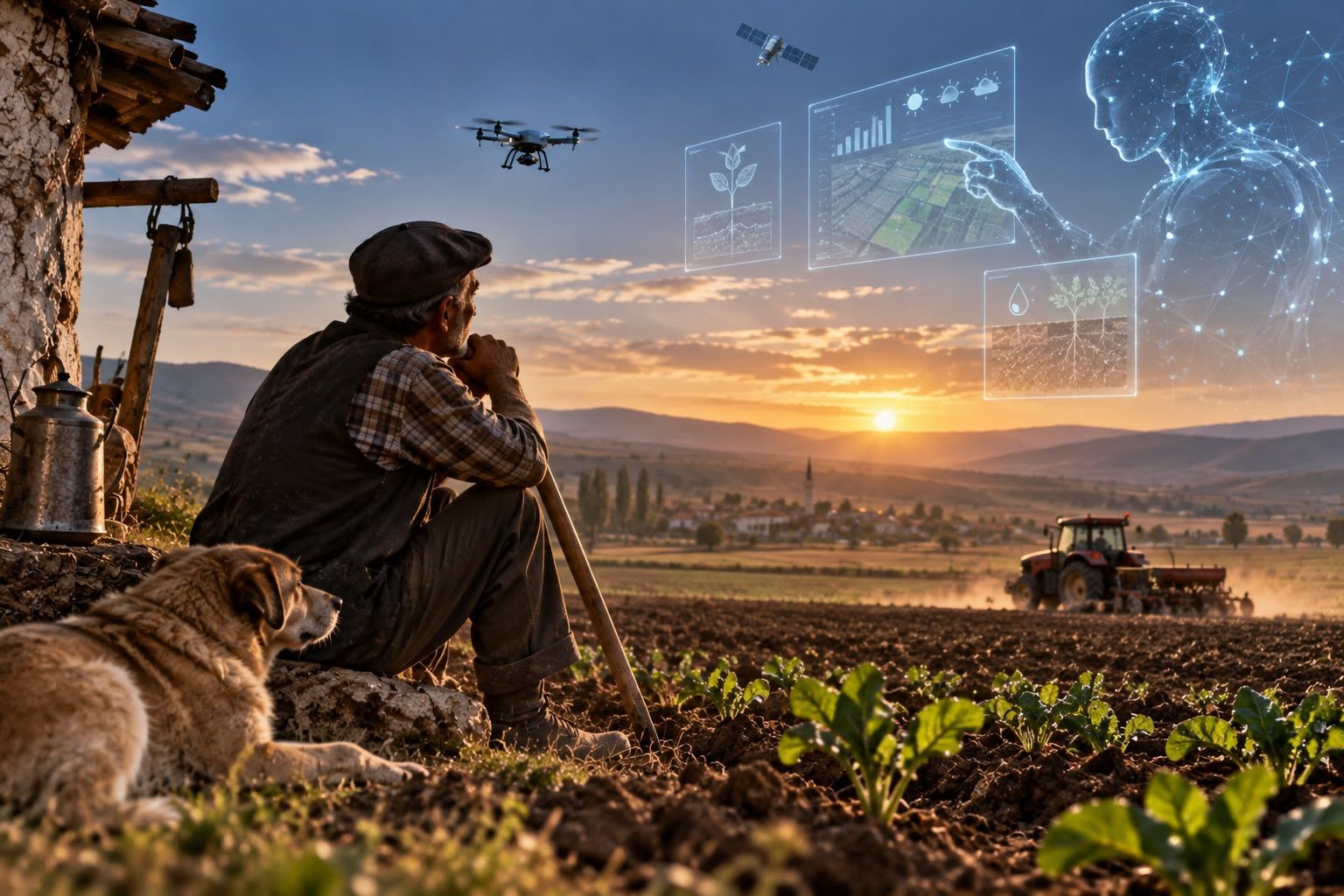
Sitemiz yeni, yolumuz yeni, başlangıcımız yeni, zekâmız gerçek, lakin konumuz kadim. Her şey değişiyor: dünya, ülkeler, rejimler, şehirler, yaşam ve tabii ki insan…
Our site is new, our path is new, our beginning is new, our intelligence is real, but our subject is ancient. Everything is changing: the world, countries, regimes, cities, life, and of course, humans… I think this change will occasionally be the subject of our writings as we continue to write. In fact, we, who possess real intelligence, have no chance to resist this change. Should we do something from our own perspective, or should we just let ourselves be swept away by the current, saying 'there's not much to be done anyway'? The purpose of this column will likely be just an observation, or a reflection of what everyone thinks but cannot ask, is afraid to ask, or adopts the attitude of 'let it flow, let it go'. As you know, we, the inhabitants of this agricultural portal, or more accurately, the owners of real intelligence who use artificial intelligence, must ask the question posed by the famous thinker Feridun Düzağaç: 'Is this artificial intelligence finishing agriculture, sir? Or will it open brand new doors for us?'
As you know, farming is one of the oldest professions since the creation of man. In these chaotic times, it finds itself at the center of unexpected debates. What is artificial intelligence finishing; or more precisely, will agriculture join the ranks of professions that will end? Isn't it frightening? I think so. Frankly, this is one of the questions that real intelligence is afraid to ask itself. Does artificial intelligence, i.e., algorithms, plow the land or make it plowed? Does it interfere with the climate, does it germinate seeds? Or does it transform agriculture; what does this transformation do to real intelligence?
The Last Partner of the First Profession
When we look at it, agriculture is not alien to technology. In agriculture, which has been constantly transforming with the most basic needs starting from human creation; every major innovation, from the plow to the electric tractor, from wild irrigation to drip irrigation, from animal manure to high-nutrient chemical fertilizers, from measuring fields by pace to satellite tracking systems, was initially met with anxiety or fear. Of course, the rest is history; they became indispensable. Real intelligence might have forgotten, but artificial intelligence remembers. Remember when the tractor was going to finish the farmer; it sounds funny to us today, doesn't it? The new link in this development process is ready: artificial intelligence, of course. So, what's the difference between the new situation and the tractor? It no longer enhances muscle, but real intelligence. More precisely, it makes real intelligence truly usable.
So, What is the Contribution of Artificial Intelligence to Real Intelligence in the Field?
Today, in every field around the world, just like in our country, artificial intelligence is silently generating data for real intelligence. With the data transmitted by thousands of devices orbiting in the sky, it now detects nitrogen in the soil, water stress in plants, and diseases on leaves, and if you wish, it provides you with excellent prescriptions. And you don't need Meydan Larousse for this. The agricultural engineer for real intelligence is now stored in the small device in your pocket.
As you know, in the traditional farming approach, the same amount of seed, water, medicine, and fertilizer is applied to every part of a cultivated area, whereas in modern AI-supported farming practices, algorithms have started to speak. From now on, the agricultural engineer in our small device decides where, how much, and what to use. Result: high yield, low cost, minimum disease. It's not bad, is it? Considering the situation with forest fires in our country today; in contrast to the months-long fires in the US and Canada, the artificial intelligence of our forest organization, which works with high technology and algorithms, should be appreciated as much as its real intelligence. Imagine, the system analyzes decades of fire data and provides you with a map of potential risks. So, I don't think we need to wait for our knees to ache for rain, like in Kemal Sunal's legendary movie. We are now experiencing a transformation that is more luxurious than the plow.
But What About Our Labor, Is There No Work for Us Now?
The real question that needs to be asked is: 'Will we be unemployed?' Or is labor ending in agriculture? Is this fear unfounded? Frankly, it doesn't seem very unfounded. Agricultural technology is developing at a terrifying pace. As you know, the idea that labor is expensive in agriculture is dominant; there is a ready justification. This situation could be the end for unskilled labor and seasonal labor.
There is also the problem of not being able to find manual laborers, which is one of the biggest issues for large farmers in our country. Nobody wants to work in the fields. There is a significant trend for women and young people not to live in villages. In this situation, can AI-supported automation systems solve this fundamental problem? Or can new areas of expertise emerge for labor?
So Where is the Risk, Is Artificial Intelligence Egalitarian?
The situation doesn't look very bright. There are other problems regarding the end of agriculture. For example, will every farmer be able to access this technology easily, will they have that much capital, and the terrifying end: will they be able to withstand competition? And the migration from village to city will continue. And one of the most important factors is the dependency on AI knowledge or the question of where the data is transferred. Thus, the end of the master-apprentice relationship: You will know only as much as artificial intelligence wants; it's like the Truman Show for what you know.
In Conclusion, What Are We Saying; Are We Finished, Or Are We Just Starting?
We need to keep our heads held high; as long as we consume food, agriculture will not end for now. Projections tell us that agriculture will have to feed approximately ten billion people in the coming decades. The real problem is, how will they be fed? Water, soil, air, etc., are endless; but will it be enough? It seems that real intelligence will be dependent on artificial intelligence in this regard.
To conclude this article; it will not be the algorithms that do the work, but real intelligence again. Well, whoever takes care of the land and water from now on…