


Free Bone Era Ends at Butcher Counters
· GıdaTarım
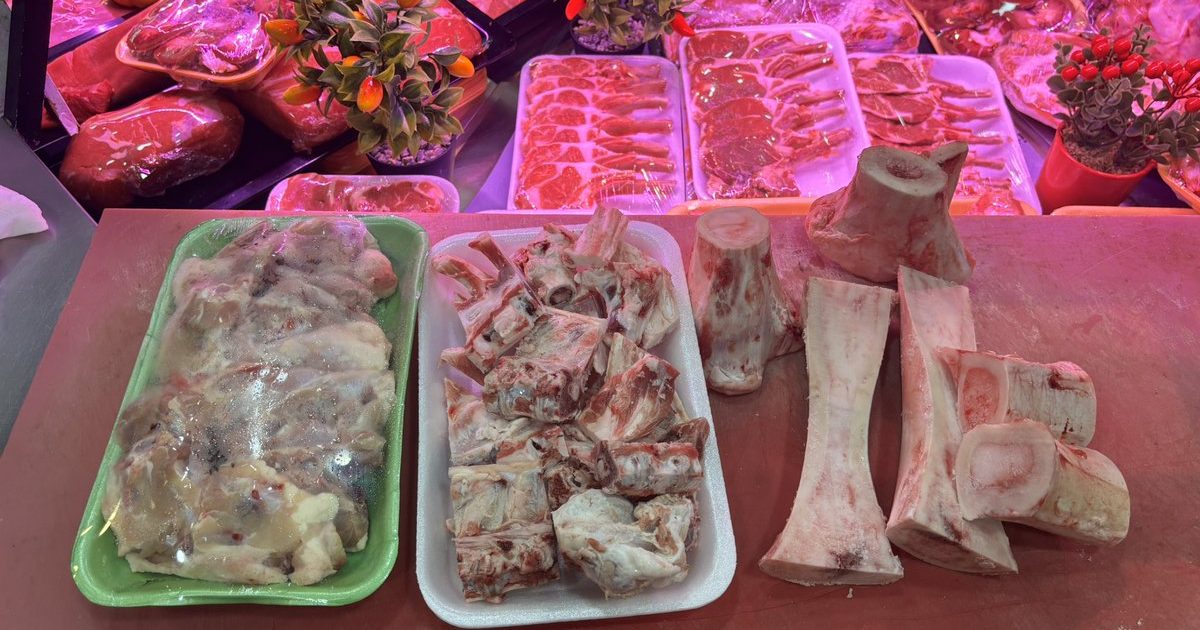
As a decline in red meat production and rising prices push consumers to seek alternatives, bones previously given away for free at butcher shops are now being packaged and sold with price tags.
Sharp Decline in Red Meat Production
The contraction in supply within the livestock sector is directly reflected in market prices and retail counters. According to TurkStat data, red meat production in Turkey decreased by 10.5% in 2025 compared to the previous year, falling to 1 million 885 thousand 130 tons. The decline in beef production was recorded at 11.5%. With this drop in production, the kilogram price of basic products like ground meat and cubed meat at butcher shops has surpassed 1000 lira, beginning to strain consumer budgets.
Food Inflation and Cost of Living
According to official data, annual inflation was recorded at 31.75% in July, while food inflation stood at 37.53%. The hunger threshold, representing the monthly expenditure required for a family of four to eat healthy and balanced meals, was 36,939 lira according to a Turk-İş survey. The poverty line rose to 120,325 lira, while the monthly cost of living for a single worker was calculated at 47,758 lira; the minimum wage of 28,075 lira remained below these figures.
The Era of Free Bones on Counters Has Ended
Due to price increases and declining purchasing power, the product range at butcher shops in districts of Istanbul such as Kâğıthane and Kadıköy Hasanpaşa has changed. Bones, which were previously offered free of charge to add flavor to meals, are now being packaged, labeled, and sold as a separate product. Chicken bones are being sold at 50 lira per kilogram, lamb bones at 100 lira per kilogram, and beef bone packages at 120 lira on the counters. While some shopkeepers continue the free practice, the general trend has shifted towards commercial sales.
Bones Are Being Purchased to Meet Demand
Due to increasing demand, businesses can no longer rely solely on the bones from the meat they process themselves. 35-year butcher Recai Tapan described the changing consumption habits and the latest situation on the counters with the following words:
"Now the situation is reversed, it's entirely about necessity. Those who can't afford meat, can't afford chicken, come and boil chicken bones. Others have started using beef bones just to give their food some flavor, to make it smell like meat. We are practically selling these bones out of stock right now. In fact, when the bones from the meat we sell in the shop are not enough, we've started buying bones from bone suppliers for a fee. There wasn't this much demand before; now, more bones are sold than meat in the shop. Today, a kilo of ground meat is a thousand lira, cubed meat is twelve hundred lira. When people can't afford meat for their homes, they at least try to ensure their children get the vitamins from the bones."