


Cattle Inventory Rises, Fattening Cattle Imports Decline
· AA Tarım & Ekonomi
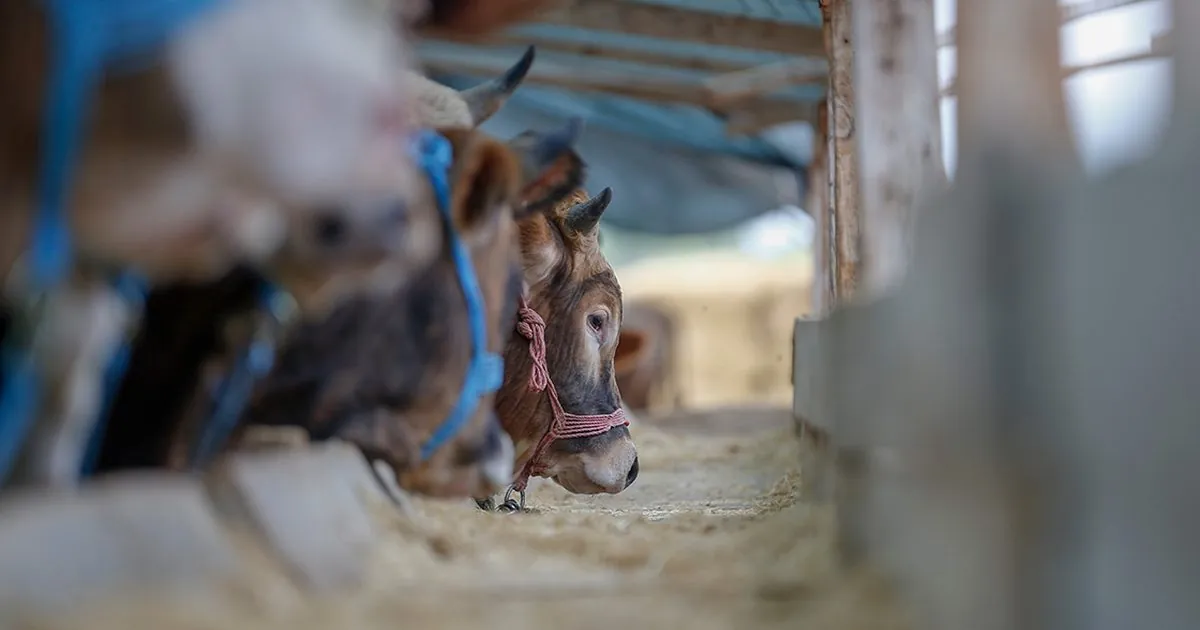
Turkey's cattle inventory surpasses 17.8 million head, while fattening cattle imports have gradually decreased thanks to controlled planning.
Thanks to the programs implemented within the scope of Turkey's Livestock Roadmap, the domestic animal inventory has shown a steady upward trend in recent years. According to data from the Turkish Statistical Institute (TurkStat), the cattle population, which was 16,583,000 head in 2023, reached 16,986,000 in 2024 and 17,709,000 in 2025. This growth trend continued uninterrupted in 2026. As of the official data for June 2026, the total cattle inventory rose to 17,805,000 head. Thus, the total cattle herd has expanded by 7.4% since 2023, recording a net increase of over 1.2 million head.
With the strengthening of the domestic herd size, quotas for fattening cattle supply from external markets have been gradually reduced. In 2023, when the private sector could import, 686,348 head of fattening cattle entered the country. With the process transferred to the coordination of the Meat and Milk Institution (ESK) in 2024, the official import permit was limited to 600,000 head, and actual imports remained at 479,803 head. The permit quota was reduced to 520,000 head in 2025, with 428,569 animals actually brought in. In 2026, an allowance of 500,000 head was set, while imports realized as of September 15th were 252,024 head, and the year-end estimate is expected to remain around 350,000 head.
In line with the new management model aimed at supporting domestic producers while maintaining supply security in the domestic market, a total import permit of 480,000 head has been planned for 2027. Within the process managed by the Meat and Milk Institution, small-scale breeders are directly protected through special quotas applied to operations with capacities of under 200 head and 200 head and above. With the distribution model to be implemented in the new period, imported fattening material will only be delivered to sustainable operations that engage in continuous and actual production. These regulations reinforce the use of fattening cattle imports not as a substitute for domestic production, but solely as a temporary complementary element that ensures market supply balance.
Strategic steps are being taken to increase the breeding stock population to meet the need for fattening material entirely from domestic sources in the long term. The 'Prosperity in Rural Areas, Support for Livestock' project, implemented within this framework, has been met with intense interest from producers. A significant increase in demand for beef breed pregnant heifers from rural breeders has been recorded. The supply of beef breed pregnant heifers, which was approximately 50,000 head last year, reached 130,000 head as of September 2026. The amount of pregnant heifers distributed by the end of the year is projected to reach 200,000 head.
Büyükbaş Hayvan Varlığı Gelişimi
TÜİK Verileri
- 2023
- 16,583,000 baş
- 2024
- 16,986,000 baş
- 2025
- 17,709,000 baş
- Haziran 2026
- 17,805,000 baş