


Coffee Harvest Rises, But Record Consumption Erodes Stocks
· Dünya Gazetesi
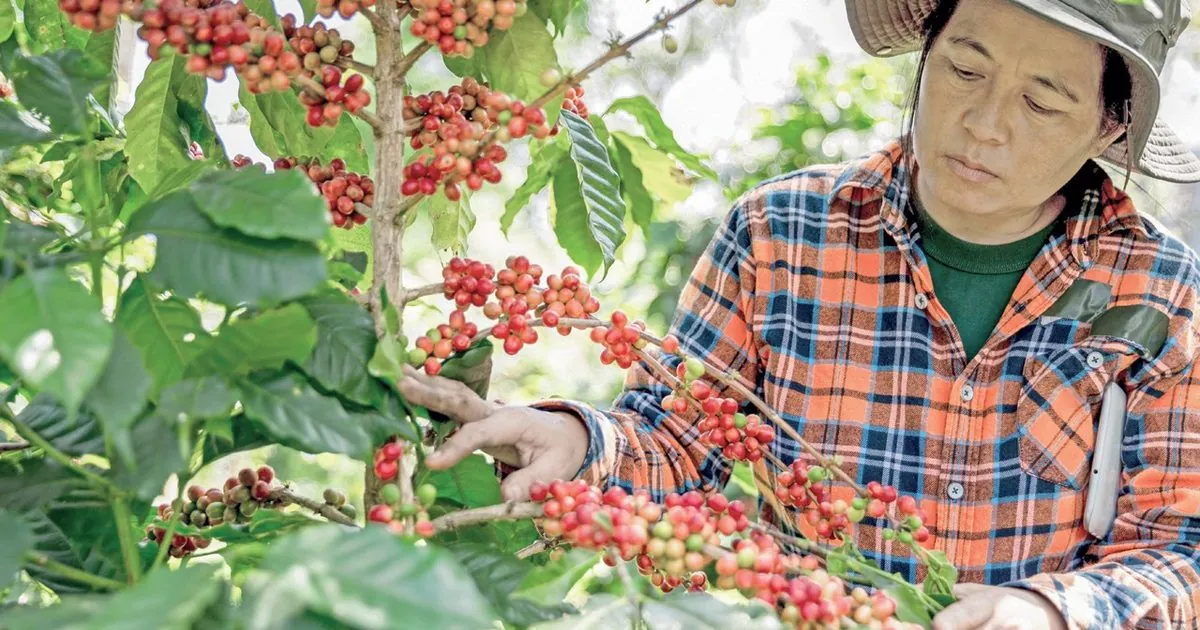
Global coffee production surpasses the 10-year average at 178.8 million bags, yet historical record demand and climate-induced production risks have reduced carry-over stocks to 20.1 million bags.
New Harvest in Global Coffee Production
The 2025-2026 season signals an upward trend in global coffee production within agricultural markets. According to U.S. Department of Agriculture (USDA) data, total coffee production worldwide is expected to rise by 1% compared to the previous season, reaching 178.8 million bags. This production volume, calculated in standard 60-kilogram bags, is significantly above the 10-year average of 169.69 million bags. Brazil, the leading producer, accounts for 35.2% of the market alone with a harvest of 63 million bags, followed by Vietnam with 31.7 million bags. Colombia, Indonesia, and Ethiopia are other main suppliers with a combined harvest of 36.3 million bags.
Record Consumption and Shrinking Stocks
This limited increase in agricultural production volume is not enough to alleviate the structural supply risks in the coffee market. According to projections shared by the USDA, global coffee demand is set to break historical records in the 2025-2026 season, reaching 173.9 million bags. In the face of rising global demand, carry-over stocks at the end of the period are estimated to fall to as low as 20.1 million bags. Even with increased production volume, the critical shrinkage in stock levels leaves coffee commodities more vulnerable than ever to unexpected weather events, drought pressure, and regional production shocks.
Price Volatility and El Nino
Coffee prices traded on international markets continue to maintain high levels due to meteorological uncertainties. According to International Coffee Organization (ICO) data, the Composite Indicator Price (I-CIP) averaged 287.29 U.S. cents per pound as of August 2026, following a level of 287.26 cents in July 2026. Concerns caused by the El Nino weather phenomenon and the short-term contraction in Arabica bean supply are exerting upward pressure on prices. Conversely, positive rainfall forecasts in Brazil and expectations of increased supply are balancing excessive price hikes within certain limits.
Surging Coffee Imports in Turkey
In the Turkish market, which is not a producer, rapid growth in coffee imports is being recorded due to changing consumption habits. Annual per capita consumption in the country, which was 350-400 grams in the early 2010s, has risen to 2.5 kilograms today. According to International Trade Centre (ITC) data, Turkey's coffee import bill climbed to $909.2 million in 2025 from $497 million in 2024. Turkey made the largest portion of these imports, $568.5 million, from Brazil, and with the development of its roasting and processing industry, it exported $126.5 million in 2025, with the largest sales of $23.02 million to Belarus.
Climate Change and Species Shift
Among the biggest structural threats facing coffee cultivation are the global climate crisis and extreme heat waves. The concentration of cultivation in narrow geographies directly transforms regional droughts and irregular rainfall anomalies into a global supply crisis. For example, in Brazil, the largest producer, a decline in the production of delicate Arabica beans is expected in the 2025-2026 period due to rising temperatures and water scarcity, while an increase in the production of more heat-resistant Robusta beans is projected. Industry stakeholders point out that the main problem in the future will not only be production volume but also how to sustain stable and quality agriculture under deteriorating climatic conditions.
The Coffee Belt and Geographical Vulnerability
Globally, coffee farming can only be done in a highly sensitive and limited geographical area dependent on equatorial climate dynamics. This narrow belt, extending between 25 degrees north and 30 degrees south of the equator, encompassing the Tropic of Cancer and the Tropic of Capricorn, is called the Coffee Belt. Although this belt, stretching from Central America to Papua New Guinea and Australia in the Pacific, covers a vast geography, it harbors high agro-ecological risks. Agricultural lands across the belt exhibit a highly vulnerable agricultural structure against diseases caused by global warming, excessive rainfall, and drought cycles.
Producer Farmers and Global Solutions
The coffee sector directly shapes the livelihoods of approximately 12.5 million smallholder farmer families globally and influences rural development dynamics. The International Coffee Organization (ICO) emphasizes the socio-economic power of this strategic commodity by declaring 'Coffee is Part of the Solution' as its theme for 2026. Through its year-long international campaign, the ICO aims to implement projects that ensure climate resilience with producers, governments, financial institutions, and private sector partnerships. The future of this commodity, which began in Yemen in the 15th century and has become a cultural value with Turkish coffee on the UNESCO list, depends on the welfare of farmers and sustainable agricultural policies.
| Değer | Dönem | Ölçüm |
|---|---|---|
| 178.8 milyon çuval | 2025-2026 | Dünya kahve üretimi |
| 1 % | 2025-2026 | Üretim artış oranı |
| 169.69 milyon çuval | Son 10 yıl | Son 10 yıl ortalama üretimi |
| 63 milyon çuval | 2025-2026 | Brezilya kahve üretimi |
| 31.7 milyon çuval | 2025-2026 | Vietnam kahve üretimi |
| 36.3 milyon çuval | 2025-2026 | Kolombiya, Endonezya ve Etiyopya toplam üretimi |
| 173.9 milyon çuval | 2025-2026 | Küresel kahve tüketimi |
| 20.1 milyon çuval | 2025-2026 | Dönem sonu stokları |
| 2.5 kg | 2026 | Türkiye kişi başı kahve tüketimi |
| 909.2 milyon dolar | 2025 | Türkiye 2025 kahve ithalatı |
| 497 milyon dolar | 2024 | Türkiye 2024 kahve ithalatı |
| 568.5 milyon dolar | 2025 | Türkiye'nin Brezilya'dan kahve ithalatı |
| 126.5 milyon dolar | 2025 | Türkiye kahve ihracatı |
| 23.02 milyon dolar | 2025 | Türkiye'nin Belarus'a kahve ihracatı |
| 287.29 ABD senti/libre | Ağustos 2026 | Birleşik Gösterge Fiyatı (I-CIP) |
| 287.26 ABD senti/libre | Temmuz 2026 | Birleşik Gösterge Fiyatı (I-CIP) |
| 12.5 milyon aile | 2026 | Kahveden gelir sağlayan çiftçi ailesi sayısı |