


Lingering Questions
· Ezher Eren ÖZ
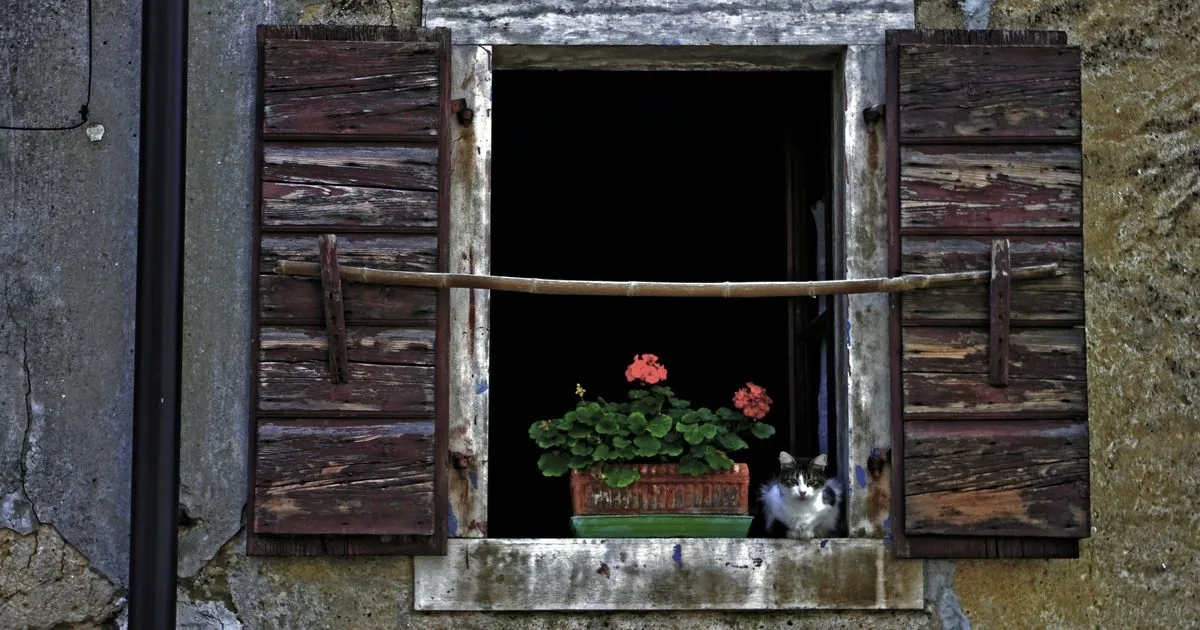
A tiny pot sat at the base of a window framed by oak. A geranium, brought to life in a few handfuls of soil, peeked its pink flowers, tinged with red and purple in places, from amidst its green leaves, excited to meet the early morning light. The father, taking a few steps towards the pot, pointed to the newly bought pot to his son, who was looking out the window, and said, 'Isn't it beautiful? Pl
A tiny pot sat at the base of a window framed by oak. A geranium, brought to life in a few handfuls of soil, peeked its pink flowers, tinged with red and purple in places, from amidst its green leaves, excited to meet the early morning light. The father, taking a few steps towards the pot, pointed to the newly bought pot to his son, who was looking out the window, and said, 'Isn't it beautiful? Plants are breath, they are life.'
The child looked at the geranium, its leaves gently swaying, and smiled. 'Yes, it looks very beautiful, Dad. Mom was very happy too,' he said. The child, gazing at the flower with admiration, wondered how a plant could instill such hope in those who look at it within such a small space. Then, turning back to his father, he excitedly said, 'Dad, it's a flower!' but couldn't finish his sentence.
His throat felt tight. The smile on his face was replaced by a wistful expression. What he was about to say suddenly hung in his mind. Because his eyes caught another scene. Images of a forest burning fiercely on a giant screen. Flames advanced through the trees they destroyed, and a dense cloud of smoke covered the sky. Firefighting teams were trying to extinguish the fire under very difficult conditions.
On one hand, a delicate flower struggling to survive in a tiny pot that excites a child; on the other hand, a vast forest disappearing before everyone's eyes… This might seem like an exaggerated example, but unfortunately, it is the reality.
Yes, we love nature. In fact, most of us boast about it. The plants we grow in our homes, the balconies adorned with flowers, the nature scenes on our phone screens and walls are proof of this. Are we doing wrong? Never. Moreover, none of these are without reason or value. There is love and longing for nature in what we do.
So, what should we say about the silent words that remained hanging in the child's mind?
How will we explain this contradiction between the pinch of green we try to keep alive in a pot and the large green that burns to ashes before our eyes?
We worry when a leaf of a flower in the corner of our home turns yellow; we water its soil, check if it's getting enough sun. We fill our balconies with flowers. We create small gardens in areas of a few square meters. Not enough, we try to buy hobby gardens.
All of these are beautiful and valuable. Because the bond a person establishes with the unique fertility and products of the soil is actually the most meaningful measure of the relationship a person has with themselves, other living beings, and nature. This is how it should be. However, we must also answer these questions.
Do we show the same care for forests stretching for kilometers, for meadows, valleys, and natural habitats as we do for a flower in our home? While we grieve for the wilting leaves of a flower inside our home, do we show the same sensitivity towards the harm done to nature, especially forests?
When we can't bear to see even a branch of a tree at our doorstep break, will we stand by and watch hundreds of trees disappear at once? Will we be content with just watching a few seconds of footage on the screen? Will we exempt ourselves from the fact that ninety percent of forest fires are human-caused?
It seems to me that we are seeking some consolation for the great losses we allow to disappear by trying to keep a small part of it alive. Yes, sometimes we plant new saplings in place of a lost forest. And we feel partially relieved.
However, a forest represents something beyond small efforts to comfort ourselves. A lost forest does not return to its former state simply by planting new trees. We forget the birds, insects, and animals living among those trees; the myriad of creatures interacting beneath the soil; the rain reaching the soil, the soil becoming fertile, the air being purified, and all these living beings existing in balance.
With the destruction of a forest, we don't just lose trees. We lose living beings, habitats, and an ecosystem that will take many years to recover.
A bird being seen less frequently than before, the disappearance of a butterfly's habitat, a stream drying up, a decrease in soil fertility, and climate change… Each of these is capable of causing serious damage to the ecosystem. Especially when all these come together, we are faced with a devastating scene that silences not just the child, but all of humanity.
Perhaps very soon, instead of the question 'Do we love nature?', we should ask ourselves, 'What are we doing to protect nature?'
Planting a tree is certainly valuable, but only if we can protect it for years. Rebuilding a forest is valuable, but only if we protect what already exists.
While considering all this, let's look again at that tiny geranium by the window.
Perhaps the child will later turn to his father and complete his unfinished sentence: 'Dad, if plants are breath and life, what are forests and nature?'
Will we be able to say, 'Nature without forests, and life without nature, is impossible. Forests and nature are the most important trust to be safely handed over to future generations for life'?
Therefore, let's continue to grow flowers in our pots, green our balconies, plant trees, and touch the soil. But let's not stop there. Let's protect our forests and nature, and help those who protect them. While looking at the geranium in front of the window, let's also make plans on how to preserve the green spaces we will leave to our children and to the future. Let's not be content with just watching the images, so that the lingering questions in our children's minds are resolved. What do you say?