


Çiftçi-Sen Demands 151 Lira Base Price for Raisins
· TMO
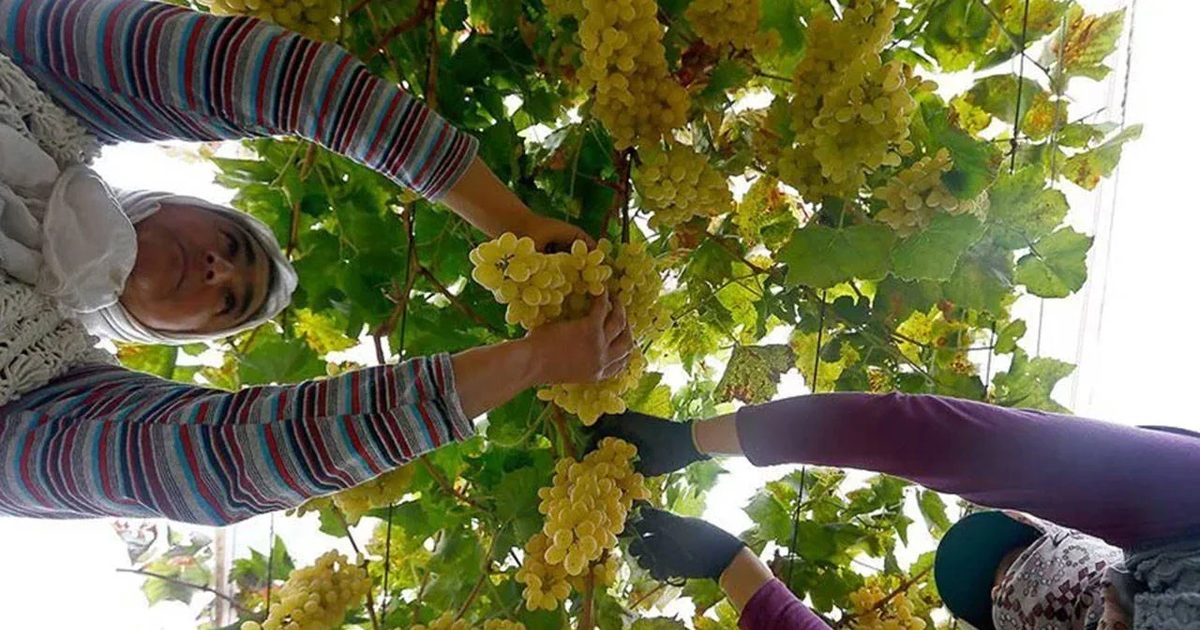
Manisa's raisin producers are reacting to the delayed announcement of purchase prices by the Turkish Grain Board (TMO) and TARİŞ, with Çiftçi-Sen demanding a base price of at least 151.50 TL per kilogram.
Demand for Base Price in Raisins
Grape producers in Manisa have reacted to the Turkish Grain Board (TMO) and TARİŞ not yet announcing the purchase price for seedless raisins, demanding a base price of at least 151 TL. Producers, stating they are forced to sell their products to traders below cost due to price uncertainty, indicate that TARİŞ is waiting for the TMO to take action. According to the cost calculation made by Çiftçi-Sen, the reference base price for 2026 needs to be at least 151.50 TL/kg, by adding a 25% profit margin and a 30% humane living share to the bare cost of 93.00 TL/kg for producers to continue production.
Input Costs and Price Decline
According to the union's data, input costs, especially diesel fuel, have increased significantly while product purchase prices have declined. According to Çiftçi-Sen's statement, diesel fuel prices, which ranged between 41–44 TL per liter in 2024 and rose to 45–53 TL in 2025, started 2026 at 55 TL and quickly increased by 50% to 83 TL. In contrast, the purchase price for fresh grapes for raisins, which was between 16–18 TL/kg last year, opened this season at 11 TL/kg.
Market Uncertainty and Producer Reaction
Grape producer Şemsi Baykal, who produces in Manisa Sarıgöl, described the market conditions with the following words:
"They are buying wine grapes for 10 liras now. I heard that table grapes are bought at a maximum of 30-37 liras. That's if the grapes are very high quality. They are also dividing payments over months. I heard that grapes will be bought for 15-20 liras today. With these prices, we can neither make a living nor pay our debts and expenses."
Producer Şemsi Baykal, stating that producers expect at least 150 lira for raisins, continued his assessment as follows:
"If a price in that range is announced, it would at least satisfy us a little. Even if they buy table grapes for 50, 60, or even 70 liras, we would say, ‘This price makes us happy.’ But no. They are openly mocking us."
Debt Burden and Production Risk
Grape producer Şemsi Baykal, explaining the pessimism in the market, conveyed the situation with the following words:
"Grapes are currently being sold at very low prices. What is 20-25 lira? My neighbors say, ‘I will buy grapes for 15 lira.’ Hearing these things, I can't see my future. People are like they've been covered in a blanket of death. No one is happy with what they do, no one is enthusiastic."
Drawing attention to the situation in the region, producer Şemsi Baykal posed two separate questions:
"90% of Manisa are grape producers. Not a single producer in Manisa is happy with their situation. What will happen if the farmer turns their back on the land?"
"The producer is not happy, the buyer is not happy, the seller is not happy. Who is happy?"
Emphasizing that the producer is left helpless in the face of the increasing debt burden, Şemsi Baykal concluded his words as follows:
"They are apparently buying grapes for 35 liras. They want to buy my grapes for 15 liras. So how will I pay my debts? Should I sell my tractor? If I can't cover my debts by selling my products, then I will have to sell my land. If I can't turn what I produce from this land into profit, if I can't be satisfied with this production, how will the people in the city be fed?"