


Saltbush Production Begins in Van to Combat Drought
· AA Tarım & Ekonomi
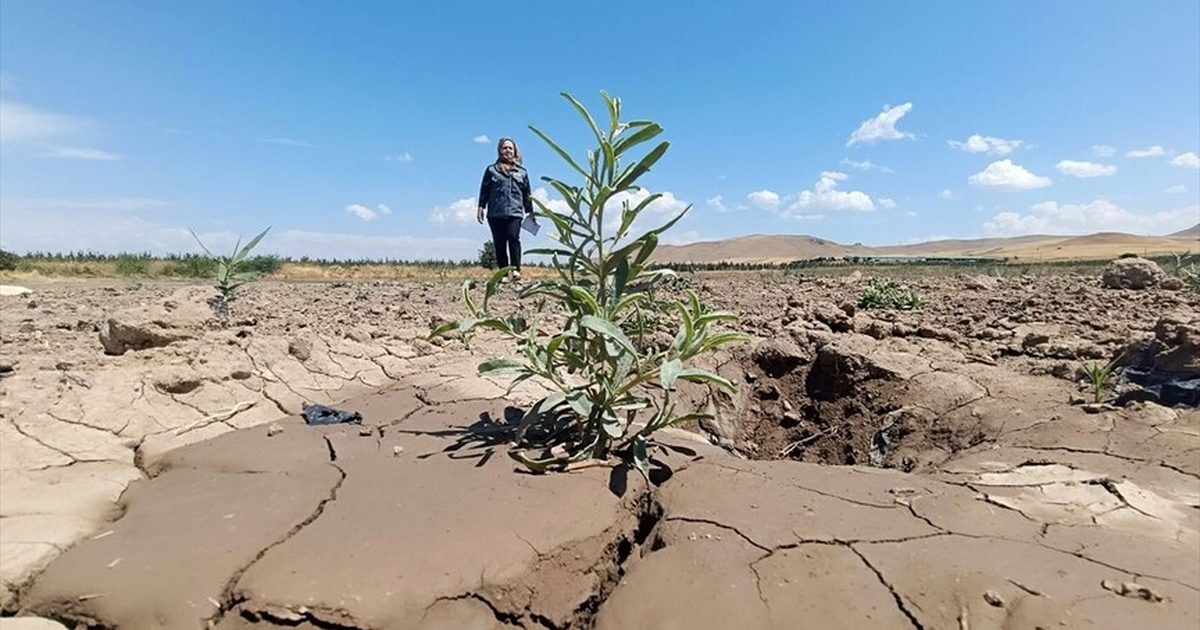
The Van Agricultural Research Institute aims to reduce roughage costs for livestock operations in the region by initiating the production of saltbush, a plant resistant to drought and soil salinity.
Drought-Resistant Alternative Feed
Within the scope of comprehensive studies to popularize plant species resistant to drought and adverse environmental conditions in Van, the production of saltbush (Atriplex canescens) has begun. In the city, which has vast pasture and plateau resources, collaboration has been established with the General Directorate of Agricultural Research and Policies (TAGEM) and the General Directorate of Plant Production (BÜGEM), affiliated with the Ministry of Agriculture and Forestry, to enhance the capacity of meadows and forage crops. Native to North America, this plant stands out for its resistance to drought and high soil salinity. Saltbush, which remains green year-round and has a high protein content, constitutes a strategic roughage alternative for livestock operations in the region.
Seed Orchard and Sapling Production
Following the successful completion of adaptation studies, the institute moved to the sapling production phase from seeds in its greenhouses. Saplings that completed their development were transferred to the field and planted in an area of approximately 20 decares. Evaluating the process, Van Agricultural Research Institute Director Dr. Gülüstan Korkmaz stated:
"Within this scope, we first assigned two of our personnel in December 2024. We started training activities on this subject. Our colleagues completed their training related to production. We actively started cultivating saltbush in our field starting from 2025. In the first phase, we established a seed orchard with 2,000 saplings on a 20-decare area. Starting from 2026, we began producing saplings from seeds in our greenhouse. We will rapidly increase sapling production next year and popularize saltbush cultivation in the region. The main goal of the study is the improvement of meadows and pasture areas. By increasing the forage yield and feed quality in these areas, we aim to reduce the roughage costs, which are one of the significant expense items for livestock operations."
Regional Agricultural Research Activities
The institute, established in 2022, serves not only the province of Van but also the provinces of Bitlis, Muş, Ağrı, and Hakkari. Among the institution's primary goals is to diversify plant and animal production in the region, particularly in the Van Lake and Zap Basin. Institute experts conduct R&D projects on hybridization, breeding, meadow-pasture management, small ruminant husbandry, medicinal aromatic plants, and the efficient use of soil and water resources. The projects aim to protect the agricultural potential of the surrounding provinces against climate change.
Combating Erosion and Pasture Improvement
To ensure the sustainability of production, the institution aims to develop domestic seed resources. The widespread adoption of saltbush directly supports the reclamation of arid and unproductive lands for agriculture and the prevention of wind erosion. Outlining future plans, Van Agricultural Research Institute Director Dr. Gülüstan Korkmaz said:
"After growing these saplings, our main goal is to obtain seeds from them, produce saplings from these seeds again, and expand saltbush cultivation in our pasture areas to combat erosion and meet the roughage needs of animals. We started our work this year. We aim to get the first seeds from our seed orchard next year."
Roughage Cost in Livestock Farming
The enrichment of vegetation cover in pasture areas aims to alleviate one of the largest expenditure items for livestock operations. Thanks to these high-protein, shrub-form plants, pasture grazing periods are extended, and the feed procurement costs for operations are balanced. Van Agricultural Research Institute Director Dr. Gülüstan Korkmaz summarized the project's economic contribution with the following words:
"The improvement of meadows and pasture areas, along with the increase in forage yield and roughage quality in these areas, will directly contribute to reducing feed costs, which are the most significant expense item for livestock operations."